
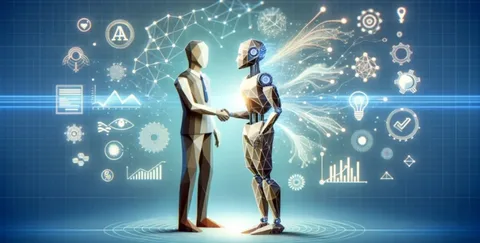
Artificial Intelligence is no longer a futuristic concept reserved for tech giants. It has become the backbone of modern marketing strategies, reshaping how brands attract, engage, and retain customers. From predictive analytics to hyper-personalized campaigns, AI is redefining what it means to connect with audiences in meaningful ways.
In 2026, AI marketing trends are not just about automation. They are about intelligence-driven decision-making, real-time optimization, and scalable personalization that delivers measurable ROI. Businesses that understand and adopt these trends are outperforming competitors, reducing marketing costs, and improving customer satisfaction.
This comprehensive guide explores the most important AI marketing trends shaping the industry today, how they work, and how you can leverage them to stay ahead.
What Is AI Marketing?
AI marketing refers to the use of artificial intelligence technologies such as machine learning, natural language processing, and data analytics to enhance marketing performance. Unlike traditional digital marketing tools, AI systems analyze massive datasets, learn from user behavior, and continuously improve campaign effectiveness without manual intervention.
AI enables marketers to:
- Predict customer behavior
- Automate repetitive tasks
- Optimize campaigns in real time
- Deliver personalized experiences at scale
- Improve customer engagement and retention
Top AI Marketing Trends in 2026
1. Hyper-Personalization at Scale
Consumers expect brands to understand their preferences. Generic messaging no longer works. AI enables marketers to analyze browsing behavior, purchase history, demographics, and engagement patterns to create individualized experiences.
Hyper-personalization includes:
- Dynamic website content
- Personalized email sequences
- AI-driven product recommendations
- Custom ad targeting
AI tools can automatically adjust content in real time based on user interactions, increasing conversion rates and customer loyalty.
2. Predictive Analytics for Smarter Decision-Making
Predictive analytics is transforming marketing strategies. By analyzing historical data, AI can forecast future behaviors, identify high-value leads, and anticipate customer churn.
Benefits include:
- Improved lead scoring
- Better audience segmentation
- Accurate demand forecasting
- Higher marketing ROI
Instead of reacting to data, businesses can proactively design campaigns that align with predicted outcomes.
3. AI-Powered Content Creation
AI tools are revolutionizing content marketing. From blog posts and ad copy to social media captions and video scripts, AI can generate optimized content faster than ever before.
Key advantages:
- Reduced production time
- SEO optimization support
- Topic clustering and keyword analysis
- Scalable content strategies
However, human oversight remains essential to maintain brand voice and authenticity.
4. Conversational AI and Advanced Chatbots
AI chatbots are no longer limited to answering simple FAQs. Modern conversational AI understands context, sentiment, and user intent.
Advanced chatbots can:
- Qualify leads automatically
- Provide personalized product recommendations
- Schedule appointments
- Offer 24/7 customer support
This improves customer satisfaction while reducing operational costs.
5. Voice and Visual Search Optimization
As voice assistants and image-based search grow in popularity, marketers must adapt. AI-driven voice and visual search require new SEO strategies focused on natural language and image recognition.
Brands optimizing for voice search focus on:
- Long-tail conversational keywords
- Question-based content
- Structured data markup
This trend is particularly important for local businesses and e-commerce platforms.
6. AI-Driven Advertising Optimization
AI enhances paid advertising through automated bidding, audience segmentation, and real-time performance analysis.
Benefits include:
- Reduced ad spend waste
- Improved click-through rates
- Better conversion tracking
- Dynamic creative optimization
AI tools continuously test variations of ads and allocate budget to the best-performing campaigns.
7. Marketing Automation 2.0
Traditional automation followed fixed rules. AI automation adapts and evolves based on user behavior.
Examples include:
- Smart email sequencing
- Automated customer journey mapping
- Behavioral retargeting
- Predictive campaign triggers
This allows marketers to deliver relevant messages at the perfect time.
8. AI and Customer Data Platforms (CDPs)
Customer Data Platforms powered by AI unify data from multiple touchpoints into a single customer profile.
This helps businesses:
- Understand omnichannel behavior
- Improve segmentation accuracy
- Deliver consistent cross-platform experiences
Data-driven insights are now central to successful marketing strategies.
Benefits of AI in Marketing
Implementing AI marketing strategies offers several measurable advantages:
- Increased efficiency and reduced manual work
- Higher conversion rates
- Improved personalization
- Better customer insights
- Scalable marketing operations
- Faster data analysis and reporting
Companies adopting AI marketing technologies are experiencing improved customer engagement and stronger competitive positioning.
Challenges of AI Marketing
Despite its advantages, AI marketing presents challenges:
- Data privacy concerns
- Ethical AI usage
- Integration complexity
- High initial implementation cost
- Dependence on data quality
Businesses must prioritize compliance, transparency, and responsible AI usage to build trust with their audience.
How to Implement AI Marketing Successfully
To leverage AI effectively:
- Start with clear marketing goals.
- Invest in clean and structured data.
- Choose AI tools aligned with business objectives.
- Train your marketing team.
- Monitor performance continuously.
- Combine AI efficiency with human creativity.
AI should enhance strategy, not replace strategic thinking.
The Future of AI Marketing
AI marketing will continue evolving toward:
- Deeper behavioral insights
- Real-time personalization across channels
- Autonomous campaign management
- AI-powered video and immersive content
- Emotion recognition technology
Businesses that adopt AI early and strategically will dominate their industries.
What is the main goal of AI marketing?
The main goal of AI marketing is to improve decision-making, personalize customer experiences, and optimize campaigns using data-driven insights.
Is AI replacing marketers?
No. AI supports marketers by automating repetitive tasks and providing insights. Human creativity, strategy, and emotional intelligence remain essential.
How does AI improve SEO?
AI improves SEO by analyzing keyword trends, optimizing content structure, predicting ranking opportunities, and automating performance analysis.
Is AI marketing expensive?
Costs vary depending on tools and scale. While initial implementation may require investment, long-term savings and ROI often justify the expense.
Can small businesses use AI marketing?
Yes. Many affordable AI tools are available for small businesses, including email automation, chatbots, and analytics platforms.
What industries benefit most from AI marketing?
E-commerce, healthcare, finance, education, and SaaS companies benefit significantly from AI-driven personalization and predictive analytics.
AI marketing is not a temporary trend. It is a fundamental transformation in how businesses operate and grow. Companies that fail to adopt AI risk falling behind competitors who leverage automation, personalization, and predictive insights.
If you want to build a powerful, data-driven marketing strategy that aligns with the latest AI marketing trends, expert guidance can make the difference.Visit walaa-elamin.com to explore professional marketing solutions tailored to your business needs.