
AI tools for e-commerce marketing
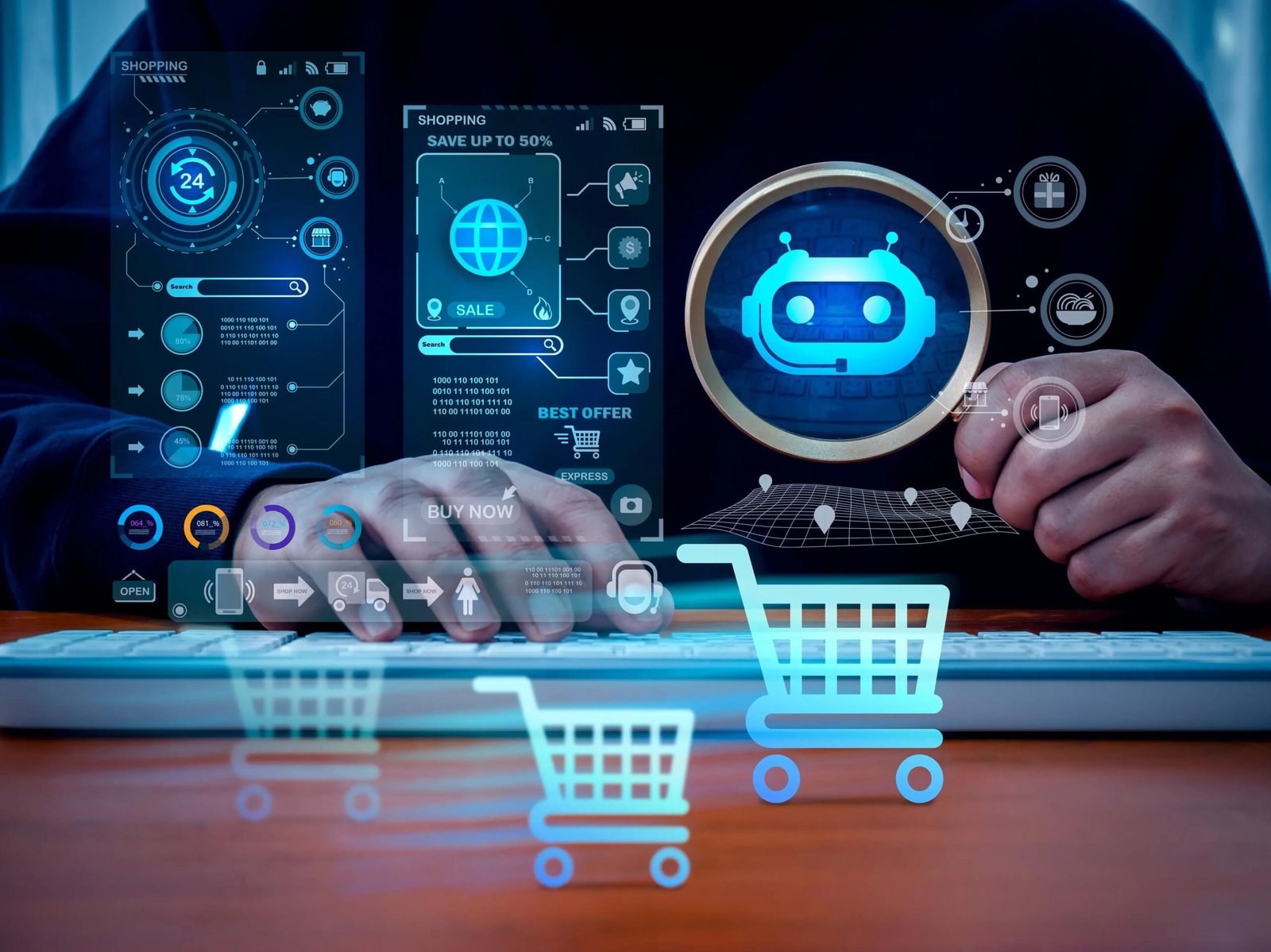
The world of e-commerce is evolving faster than ever. With increasing competition, changing customer behavior, and rising advertising costs, online businesses are constantly searching for smarter ways to attract customers and increase sales. This is where artificial intelligence (AI) is making a remarkable impact.
AI tools for e-commerce marketing are no longer a luxury reserved for large corporations. Today, businesses of all sizes can leverage AI-powered solutions to automate repetitive tasks, improve customer experiences, optimize marketing campaigns, and generate higher revenue with less effort.
Whether you run a small online store or manage a large e-commerce brand, understanding how AI can transform your marketing strategy is essential for staying competitive in today’s digital marketplace.
What Are AI Tools for E-commerce Marketing?
AI tools for e-commerce marketing are software solutions that use machine learning, predictive analytics, natural language processing, and automation technologies to improve marketing performance.
These tools help businesses:
- Analyze customer behavior
- Personalize shopping experiences
- Create marketing content
- Automate customer support
- Improve product recommendations
- Optimize advertising campaigns
- Increase customer retention
- Enhance email marketing performance
By processing large amounts of data quickly and accurately, AI tools can identify patterns and opportunities that would be difficult for humans to detect manually.
Why AI Matters in E-commerce Marketing
Modern consumers expect personalized experiences. They want relevant product recommendations, timely communication, and seamless shopping journeys.
AI helps e-commerce brands meet these expectations by delivering:
Better Customer Understanding
AI analyzes browsing history, purchase behavior, demographics, and engagement patterns to create detailed customer profiles.
This allows businesses to understand:
- Customer preferences
- Purchase intent
- Buying frequency
- Product interests
- Potential lifetime value
Improved Marketing Efficiency
Many marketing tasks require significant time and resources. AI automates repetitive processes, allowing teams to focus on strategy and growth.
Examples include:
- Email automation
- Social media scheduling
- Ad optimization
- Customer segmentation
- Product categorization
Increased Revenue
AI-driven personalization can significantly improve conversion rates by showing customers products and offers that match their interests.
When shoppers receive relevant recommendations, they are more likely to:
- Add products to their cart
- Complete purchases
- Return for future purchases
- Spend more per order
Top AI Applications in E-commerce Marketing
Personalized Product Recommendations
One of the most effective uses of AI in e-commerce is product recommendation engines.
These systems analyze:
- Purchase history
- Browsing behavior
- Similar customer interests
- Product interactions
They then recommend products most likely to appeal to individual shoppers.
Benefits include:
- Higher conversion rates
- Increased average order value
- Better customer satisfaction
- Reduced bounce rates
Many major online retailers generate a significant portion of their revenue through AI-powered recommendation systems.
AI-Powered Content Creation
Creating high-quality content consistently can be challenging for e-commerce businesses.
AI content tools help generate:
- Product descriptions
- Blog articles
- Email campaigns
- Social media captions
- Advertising copy
These tools accelerate content production while maintaining consistency across marketing channels.
However, human review remains important to ensure accuracy, originality, and brand alignment.
Smart Email Marketing
Email marketing continues to deliver one of the highest returns on investment in digital marketing.
AI enhances email marketing by:
- Predicting optimal send times
- Personalizing subject lines
- Segmenting audiences automatically
- Recommending products dynamically
- Optimizing campaign performance
As a result, businesses can achieve higher open rates, click-through rates, and conversions.
AI Chatbots and Virtual Assistants
Customers expect instant support when shopping online.
AI chatbots provide:
- 24/7 customer service
- Product recommendations
- Order tracking assistance
- Frequently asked question responses
- Cart recovery support
These virtual assistants improve customer satisfaction while reducing support costs.
Predictive Analytics
Predictive analytics uses historical data to forecast future outcomes.
For e-commerce businesses, this can help predict:
- Customer purchasing behavior
- Seasonal demand
- Inventory requirements
- Customer churn risk
- Marketing campaign performance
Predictive insights enable better business decisions and resource allocation.
AI Advertising Optimization
Paid advertising can quickly become expensive if campaigns are not properly managed.
AI advertising tools help optimize:
- Audience targeting
- Bid management
- Ad creatives
- Budget allocation
- Conversion tracking
By continuously analyzing campaign data, AI can identify opportunities to improve performance and reduce wasted ad spend.
Benefits of AI Tools for Online Stores
Enhanced Customer Experience
Personalized shopping experiences increase customer satisfaction and loyalty.
AI ensures customers receive:
- Relevant recommendations
- Personalized offers
- Faster support
- Tailored communication
These experiences encourage repeat purchases and long-term relationships.
Time Savings
Marketing teams often spend countless hours on manual tasks.
AI automates activities such as:
- Data analysis
- Content generation
- Audience segmentation
- Campaign monitoring
- Customer support
This saves valuable time and improves productivity.
Better Decision Making
AI transforms raw data into actionable insights.
Instead of relying on assumptions, businesses can make decisions based on:
- Customer behavior data
- Market trends
- Predictive forecasts
- Performance analytics
Data-driven strategies typically produce better results than guesswork.
Scalability
As an e-commerce business grows, managing marketing operations becomes more complex.
AI helps scale processes without requiring proportional increases in staffing or resources.
This makes growth more sustainable and cost-effective.
How to Choose the Right AI Tools for E-commerce Marketing
Not every AI solution is suitable for every business.
When evaluating AI tools, consider:
Business Goals
Identify your primary objectives:
- Increase sales
- Improve customer retention
- Automate support
- Enhance personalization
- Reduce marketing costs
Choose tools aligned with those goals.
Integration Capabilities
Ensure the tool integrates smoothly with:
- E-commerce platforms
- CRM systems
- Email marketing software
- Analytics tools
- Advertising platforms
Seamless integration improves efficiency and data accuracy.
Ease of Use
Complex systems can create adoption challenges.
Look for tools that offer:
- User-friendly interfaces
- Clear reporting dashboards
- Reliable customer support
- Comprehensive documentation
Budget Considerations
AI tools vary widely in pricing.
Evaluate:
- Monthly subscription costs
- Implementation expenses
- Expected return on investment
- Scalability costs
The best solution is one that delivers measurable value within your budget.
Common Challenges When Using AI in E-commerce
Despite its advantages, AI implementation can present challenges.
Data Quality Issues
AI relies on accurate data.
Poor-quality data can lead to:
- Incorrect recommendations
- Inaccurate predictions
- Ineffective campaigns
Businesses should prioritize data cleanliness and consistency.
Over-Automation
Automation should enhance customer experiences, not replace human interaction entirely.
Maintaining a balance between automation and personal engagement is crucial.
Privacy and Compliance
Businesses must ensure AI usage complies with privacy regulations and data protection requirements.
Transparency and ethical data practices help build customer trust.
The Future of AI in E-commerce Marketing
The role of AI in e-commerce will continue to expand.
Future innovations may include:
- Hyper-personalized shopping experiences
- Advanced voice commerce
- Real-time predictive marketing
- AI-generated visual content
- Enhanced customer journey optimization
Businesses that adopt AI strategically today will be better positioned to compete in the future digital marketplace.
What are AI tools for e-commerce marketing?
AI tools for e-commerce marketing are software solutions that use artificial intelligence to automate marketing activities, personalize customer experiences, optimize campaigns, and improve sales performance.
How can AI increase e-commerce sales?
AI increases sales through personalized recommendations, targeted marketing campaigns, predictive analytics, automated customer support, and optimized advertising strategies.
Are AI tools suitable for small e-commerce businesses?
Yes. Many affordable AI tools are designed specifically for small and medium-sized businesses, making advanced marketing automation accessible to companies with limited budgets.
Can AI replace human marketers?
No. AI enhances marketing efforts by automating repetitive tasks and providing insights, but human creativity, strategy, and decision-making remain essential.
What is the biggest advantage of AI in e-commerce?
The biggest advantage is the ability to deliver personalized customer experiences at scale while improving efficiency and marketing performance.
How do AI chatbots help online stores?
AI chatbots provide instant customer support, answer common questions, recommend products, assist with orders, and improve customer satisfaction around the clock.
AI tools for e-commerce marketing are transforming the way online businesses attract, engage, and retain customers. From personalized recommendations and predictive analytics to automated customer support and advertising optimization, AI enables brands to operate more efficiently and achieve better results.
As competition in e-commerce continues to grow, leveraging AI is becoming a necessity rather than an option. Businesses that embrace AI-driven marketing strategies can improve customer experiences, increase sales, and build sustainable long-term growth.
Ready to elevate your marketing strategy and unlock the full potential of AI for your business? Visit Walaa El-Amin’s website to learn more about digital marketing solutions and expert guidance. For personalized support and consultation, click Contact today.