
Marketing Automation
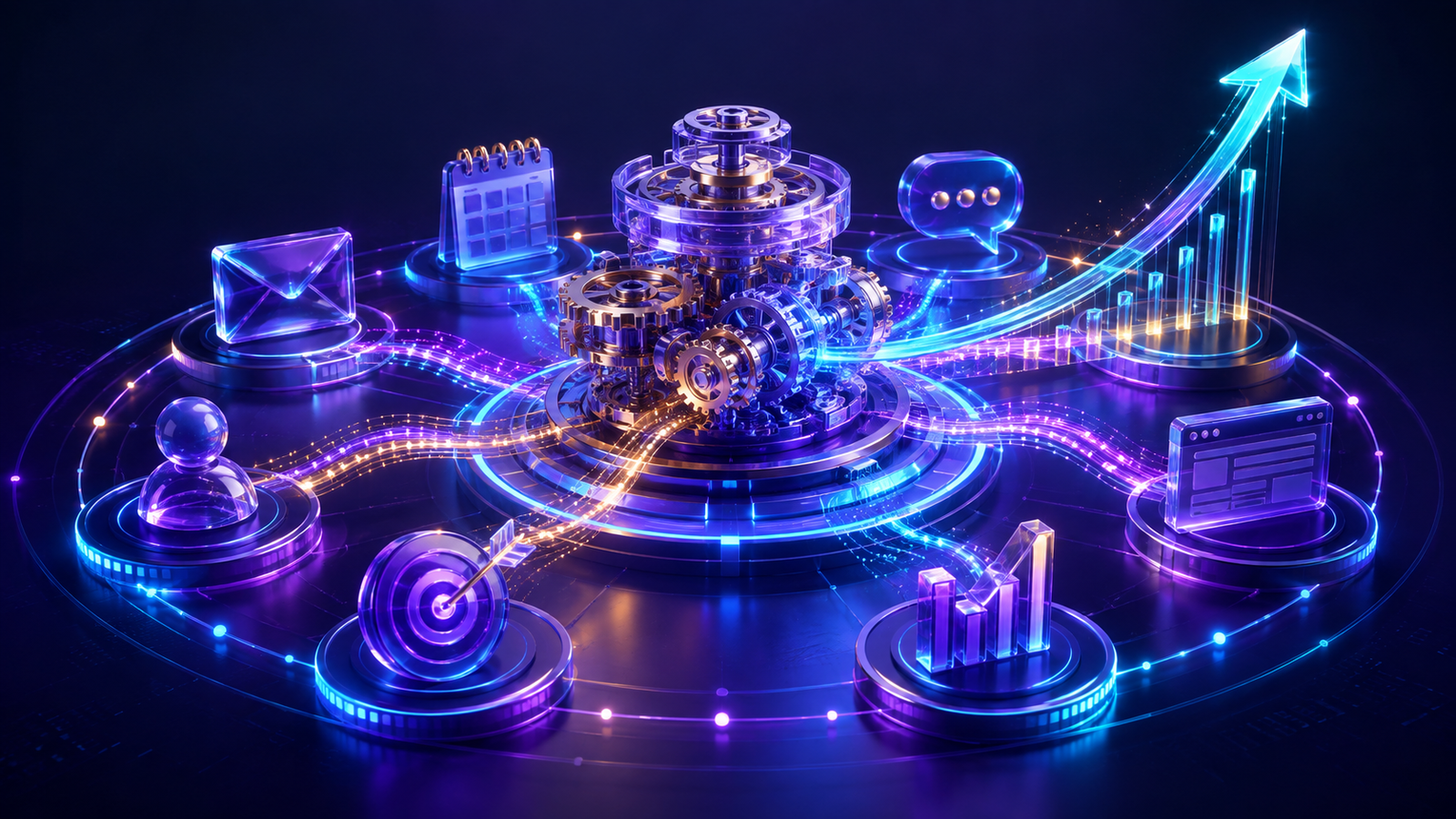
Marketing teams are expected to deliver personalised customer experiences, generate qualified leads, analyse data and improve campaign performance across an increasing number of digital channels. Attempting to manage every email, follow-up, customer segment and campaign manually is no longer practical. This is where marketing automation becomes essential.
Marketing automation helps businesses deliver the right message to the right person at the right time without requiring a team member to manage every interaction manually. However, effective automation is not simply about purchasing software or scheduling a series of emails. It requires a clear strategy, reliable customer data, relevant content and continuous performance analysis.
When properly implemented, marketing automation can save time, improve lead management, strengthen customer relationships and help marketing teams make better decisions. This guide explains what it is, how it works, which activities can be automated and how businesses can build a successful automation strategy.
What Is Marketing Automation?
Marketing automation is the use of technology to manage repetitive marketing activities and customer interactions based on predefined rules, behaviours or data.
Instead of manually sending every email or assigning every lead, businesses can create automated workflows. These workflows perform specific actions when a customer meets a condition or completes an activity.
For example, when someone downloads a guide from a website, an automation platform can:
- Add the person to a relevant audience segment.
- Send a confirmation email.
- Deliver the requested guide.
- Start a lead-nurturing email sequence.
- Notify a sales representative if the person demonstrates buying intent.
- Record subsequent interactions for performance analysis.
This process enables the business to respond quickly while maintaining consistency across the customer journey.
Marketing automation can support email marketing, lead generation, customer segmentation, social media publishing, paid advertising, reporting and customer retention. It often functions as part of a broader digital marketing strategy.
Why Is Marketing Automation Important?
Customers interact with businesses through websites, emails, social platforms, online advertisements and customer service channels. Each interaction generates information that can help a company understand customer needs and deliver more relevant communication.
Managing these interactions manually becomes increasingly difficult as a business grows. Marketing automation creates a structured system that can process customer actions and respond at scale.
1.It Saves Time
Repetitive activities such as sending welcome emails, publishing scheduled posts and distributing reports can consume a large part of a marketing team’s working day. Automating these activities allows marketers to focus on planning, creativity, analysis and campaign optimisation.
2.It Improves Customer Experience
Customers do not all have the same interests or needs. Automation makes it possible to deliver communication based on behaviour, preferences, location, purchase history or stage in the buying journey.
A new lead may receive educational content, while an existing customer could receive product recommendations or renewal reminders. This creates a more relevant and helpful experience.
3.It Supports Lead Nurturing
Not every lead is ready to purchase immediately. Some potential customers need additional information and reassurance before making a decision.
Automated nurturing workflows can introduce the business, explain its value, answer common objections and present relevant offers over time. This helps maintain communication with leads without overwhelming the sales team.
4.It Creates Consistent Communication
Manual marketing processes can result in missed follow-ups, inconsistent messaging and delayed responses. Automation ensures that every qualified contact receives the intended communication according to the established workflow.
5.It Provides Better Performance Data
Automation platforms can track opens, clicks, website visits, form submissions, conversions and revenue. These insights help marketers understand which messages and campaigns influence customer decisions.
Companies can use this information to improve their wider marketing planning and allocate budgets more effectively.
Which Marketing Activities Can Be Automated?

Marketing automation can support several areas of a company’s marketing system. The appropriate activities depend on the business model, available data and customer journey.
1.Email Marketing Automation
Email is one of the most common applications of marketing automation. Businesses can create workflows for:
- Welcome messages.
- Educational email sequences.
- Abandoned basket reminders.
- Product recommendations.
- Event confirmations.
- Subscription renewals.
- Customer feedback requests.
- Re-engagement campaigns.
- Post-purchase communication.
Automated emails should still feel relevant and personal. Sending more messages does not automatically produce better results. Every email should serve a clear customer or business purpose.
2.Lead Capture and Management
Automation platforms can capture information from landing pages, website forms, webinars and downloadable resources. Leads can then be organised according to their source, interests and behaviour.
A business can automatically assign high-value leads to the appropriate sales representative while placing early-stage contacts into a nurturing campaign.
This alignment between marketing and sales helps teams respond faster and reduces the possibility of valuable opportunities being overlooked.
3.Customer Segmentation
Audience segmentation is essential for relevant marketing. Automation tools can create and update customer groups based on factors such as:
- Demographic information.
- Geographic location.
- Website behaviour.
- Email engagement.
- Previous purchases.
- Customer value.
- Product interest.
- Position in the sales funnel.
Dynamic segments change automatically when a customer’s behaviour or information changes. This makes them more accurate than manually maintained lists.
4.Social Media Scheduling
Businesses can schedule content across different platforms and manage publishing calendars through automation tools. This improves consistency and reduces the time required to publish posts manually.
However, audience conversations, complaints and sensitive enquiries still require thoughtful human responses. Social media automation should support genuine engagement rather than replace it.
5.Paid Advertising Automation
Advertising platforms can automate audience targeting, bid adjustments, budget distribution and campaign optimisation. They can also retarget visitors who viewed a product or completed a particular website action.
Automation can improve efficiency, but campaign objectives and measurement must still be managed strategically. Automated recommendations should be evaluated against commercial priorities and return on marketing investment.
6.Reporting and Analytics
Marketing teams often spend considerable time collecting performance information from different platforms. Automated dashboards can combine important data and distribute regular reports to relevant decision-makers.
Useful reports should focus on meaningful indicators such as qualified leads, conversion rates, customer acquisition costs and revenue—not simply impressions or clicks.
How Does Marketing Automation Work?
Most marketing automation workflows consist of four connected elements.
1. A Trigger
The trigger starts the workflow. It could be a form submission, email click, website visit, purchase, abandoned basket or a period of inactivity.
2. A Condition
A condition determines what should happen next. For example, the system may check whether the contact is a new lead, an existing customer or someone who has already purchased a particular product.
3. An Action
The action is the task completed by the automation platform. It may send an email, update a customer record, assign a lead or create a sales notification.
4. Measurement
The business evaluates whether the workflow achieves its intended goal. Performance indicators may include engagement, qualified leads, completed purchases or customer retention.
These elements can produce simple workflows or sophisticated customer journeys. The best approach is usually to begin with a focused process and expand after verifying the results.
How to Build a Successful Marketing Automation Strategy
Automation will not solve an unclear strategy or repair poor customer data automatically. Businesses need a structured implementation plan.
1.Define a Specific Objective
Every workflow should have a measurable purpose. A business may want to increase qualified enquiries, recover abandoned baskets, improve event attendance or retain existing customers.
Avoid implementing automation solely because a platform offers a particular feature.
2.Map the Customer Journey
Identify the steps customers take from initial awareness to purchase and retention. Determine what information, reassurance or assistance they require at each stage.
This prevents the business from automating isolated activities that do not contribute to a coherent experience.
3.Organise and Protect Customer Data
Customer data should be accurate, relevant and collected lawfully. Remove duplicate records, standardise important fields and define how information moves between marketing, sales and customer service systems.
Businesses must also respect consent, privacy and communication preferences. Automation should never be used to ignore a customer’s decision to unsubscribe or decline marketing communication.
4.Create Useful Content
Automated workflows depend on content. This may include emails, guides, case studies, demonstrations, landing pages and frequently asked questions.
Content should match the customer’s needs at each stage. A person discovering a problem may need educational information, while a decision-ready prospect may need a detailed comparison or consultation.
For additional support with planning content, channels and campaigns, businesses can explore professional marketing consulting services.
5.Select the Right Platform
The most expensive or complex platform is not necessarily the most suitable. Evaluate tools according to:
- Business objectives.
- Team capabilities.
- Contact volume.
- Required integrations.
- Reporting features.
- Data management requirements.
- Scalability.
- Total implementation cost.
Artificial intelligence is also becoming increasingly connected to automation through predictive analytics, content assistance and audience analysis. The website’s guide to AI marketing tools provides further context on this development.
Test Before Expanding
Begin with one high-value workflow and test every step. Confirm that triggers, conditions, links, forms and notifications work correctly.
After launching, compare performance against a clear baseline. Once the workflow produces reliable results, the business can adapt the model to other stages of the customer journey.
Common Marketing Automation Mistakes
1.Automating Without a Strategy
Creating multiple workflows before defining the customer journey can produce confusing and disconnected communication.
2.Sending Too Many Messages
Automation makes communication easier, but that does not mean customers should receive more messages. Frequency should reflect customer expectations and engagement.
3.Using Inaccurate Data
Incorrect names, duplicated contacts and outdated information can damage trust. Data quality should be addressed before complex workflows are introduced.
4.Ignoring Human Interaction
Some customers need direct support, negotiation or reassurance. Effective automation identifies when human intervention is necessary and routes the contact appropriately.
5.Measuring Activity Instead of Results
Email opens and clicks can be useful indicators, but they do not always reflect business performance. Marketing teams should connect automation metrics to qualified leads, conversions, revenue and retention.
6.Failing to Optimise Workflows
Customer behaviour and market conditions change. Workflows should be reviewed regularly and improved using performance data, customer feedback and controlled testing.
Marketing Automation and Artificial Intelligence
Marketing automation and artificial intelligence are related but not identical.
Traditional automation generally follows predefined rules. If a customer performs an action, the platform delivers a predetermined response. AI can analyse larger datasets, identify patterns and make predictions that help improve these rules.
AI-supported automation may recommend the best sending time, predict which leads are most likely to convert or personalise content according to customer behaviour.
Human oversight remains essential. Marketing leaders must verify data quality, assess recommendations and ensure that automated decisions remain aligned with brand standards and business objectives.
What is the main purpose of marketing automation?
Its main purpose is to manage repetitive marketing activities efficiently while delivering relevant communication throughout the customer journey. It helps teams save time, nurture leads and measure results more consistently.
Is marketing automation suitable for small businesses?
Yes. Small businesses can begin with simple workflows such as welcome emails, enquiry follow-ups and appointment reminders. The system should match the size, goals and operational capacity of the business.
Does marketing automation replace marketers?
No. It manages repetitive processes, but marketers are still responsible for strategy, creativity, content, data interpretation and customer understanding.
What is an example of marketing automation?
A common example is an automated welcome sequence. When a visitor subscribes, the platform sends a confirmation, delivers useful information and follows up with relevant content over several days.
How long does implementation take?
A basic workflow can be implemented relatively quickly, while a complete system connecting multiple platforms may require several weeks or months. The timeframe depends on data quality, integrations and workflow complexity.
What is the difference between CRM and marketing automation?
A CRM primarily manages customer and sales information. Marketing automation manages campaigns, segmentation and nurturing activities. Many platforms integrate both functions to create a connected view of the customer journey.
How can businesses measure marketing automation success?
Success can be measured using lead quality, conversion rates, customer acquisition cost, sales cycle length, revenue contribution, retention and return on marketing investment.
Can marketing automation improve customer retention?
Yes. Businesses can automate onboarding, product education, renewal reminders, feedback requests and re-engagement campaigns to maintain valuable customer relationships.
Build a Smarter Marketing System
Successful marketing automation requires more than technology. It needs a clear strategy, reliable data, relevant content and continuous optimisation. When these elements work together, marketing automation can create better customer experiences and produce measurable commercial value.
If you want to build an automation strategy that supports your marketing objectives and return on investment, visit Walaa ElAmin and get in touch to discuss the right approach for your business.